

Not every artist you sign comes with a press kit and a pitch. Some arrive with something harder to name.
I met Vache Fou and several other Adore Recordings artists one night after receiving a random invite from a friend’s brother to the “4-Track Club.” The 4-Track Club was a monthly gathering of musicians who came together to share the music they were working on. These gatherings were special, a time to share your music and listen to others’ in a very supportive, unassuming space. The group included many of Cincinnati’s top bands and musicians. It was there that I first heard several projects and bands Vache was involved in, including Cluck the Hen. I was a producer and sound designer among very talented musicians, so the room always felt intimidating when sharing pieces I was working on.
What I noticed immediately was that Vache Fou doesn’t describe music the way most artists do. There are no genre references, no influences rattled off, no comparisons to other acts. Instead, there is a way of speaking about sound that feels more like cosmology than biography. And once you hear the music, that makes complete sense.
Vache Fou was instrumental, serving as the glue that helped me establish myself as a Trip-Hop music producer. Ambient and electronic music were always my forte. I loved female vocals over beats ever since first hearing Portishead. As I shifted away from being a DJ in the Midwest rave scene and toward playing at more refined gatherings, I wanted to collaborate with other artists on the edges of Indie Rock and other genres. I did not start writing lyrics until I started working with Vache. Our first EP was a massive hit in our local music scene, crossing over into both the rave and indie rock scenes. That entire EP was written from random one-liners in several of my journals. We recorded the EP in one night in my studio while we were snowed in during a storm. During that same night, we decided on the band name, Popularity Contest Committee. That snowstorm gave us a name, a record, and a creative partnership that has never really ended. Years later, when I was building the Adore catalog and thinking carefully about which artists carried that same willingness to follow sound into unexpected territory, Vache Fou was never a question. She was always going to be here. What surprises me still, every time I return to her work, is how fully formed the philosophy was from the very beginning. The music was always trying to tell you something. You just had to be still enough to hear it.
This is her story, told almost entirely in her own words. Read slowly.
Where It Begins: Not a Place, But a Listening Post
When I asked Vache Fou where she is from, the answer wasn’t a city. It was an hour of the day.
“I come from a place that exists somewhere between nightfall and morning steam — the hour when a coffee percolator murmurs like a small universe waking up. Geographically, there are coordinates, of course. But musically, I feel more like a traveler moving along invisible rivers: the Nile at midnight, city lights reflecting in black and blue glass, the hum of apartments where water heaters click on like quiet constellations.”
“Where I am now is less a location than a listening post. A place where signals pass through me.”
I’ve interviewed many artists over the years. That is one of the most precise descriptions of a creative identity I’ve ever received.
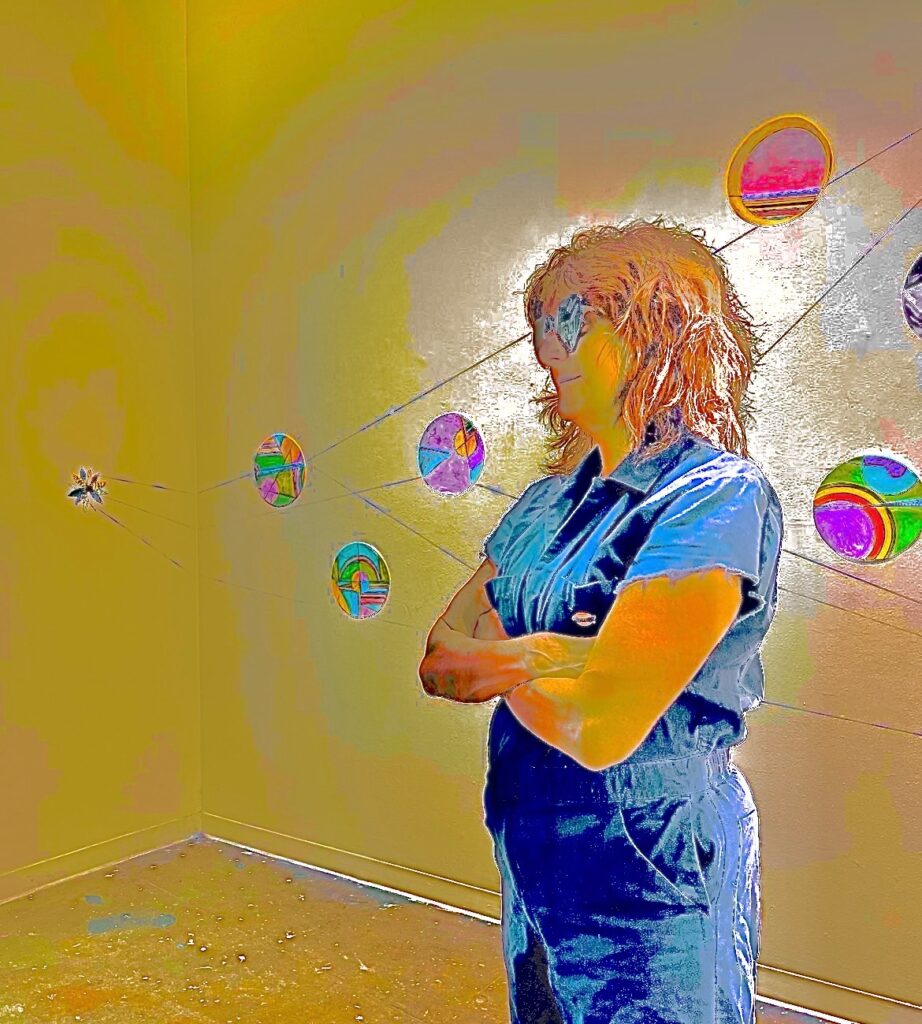
Learning to Listen Before Learning to Play
Vache Fou didn’t come to music through instruments or formal training. She came through attention.
“I started by listening to machines breathe. The low percussion of radiators, the rhythmic pulse of kitchen appliances, distant traffic echoing like ritual drums. I never felt like I was ‘learning music’ in the traditional sense. It was more like discovering that the world was already singing. My role became that of a collector of vibrations — engraving them into loops, textures, and fragments.”
“Sound, to me, has always been an alchemical process: raw noise heated until it becomes emerald light.”
Before that understanding fully arrived, her music was more conventional. Structured. Careful. Vache Fou describes that earlier period with characteristic honesty.
“There were beats, but they were polite. Harmonies, but they were careful. It was the sound of someone standing outside the door of their own mythology.”
During that time, she was searching for something specific in the music she consumed.
“I was listening to everything that felt like a transmission rather than a product. Recordings that sounded like messages from elsewhere — love songs written across centuries, field recordings of invisible places, voices that felt like ancient poems echoing through modern circuitry. I was trying to move away from imitation and closer to something collective, something cosmic.”
The Night the Power Flickered
Every artist I’ve ever featured has a moment. A specific before-and-after. For Vache Fou, it happened during a storm.
“There was a night when the electricity flickered during a storm. The room was almost dark, tinted lilac by a small lamp. The coffee percolator was still running, bubbling quietly like some domestic volcano. I had a loop playing — just a fragment of sound — and when the power dipped, the pitch bent and stretched in a strange, beautiful way. For a moment everything felt alive: machines, wires, breath, electricity.”
“It struck me that music wasn’t something I needed to control. It was something I could allow to pass through me.”
That shift in relationship to the material, from author to conduit, from control to allowance, is one of the most significant creative realizations any artist can have. Vache Fou articulates it simply.
“I wasn’t the author — I was the conduit. Sound wanted to organize itself if I let it. The role of the artist wasn’t to dominate the material but to heat it, like an alchemist tending a flame.”
What came immediately after that night was music that finally matched what had always been living inside it.
“The first pieces after that moment felt like night-time stories whispered through circuitry. The structures loosened. Rhythms drifted like bees navigating turquoise air. Textures layered in unexpected ways — black and blue atmospheres, emerald pulses, flickers of heat like engraved fire.”
“It unlocked permission. Permission to let imperfection breathe. Permission to follow intuition instead of rules. From that moment on, the music became less about composition and more about listening to what wanted to emerge.”
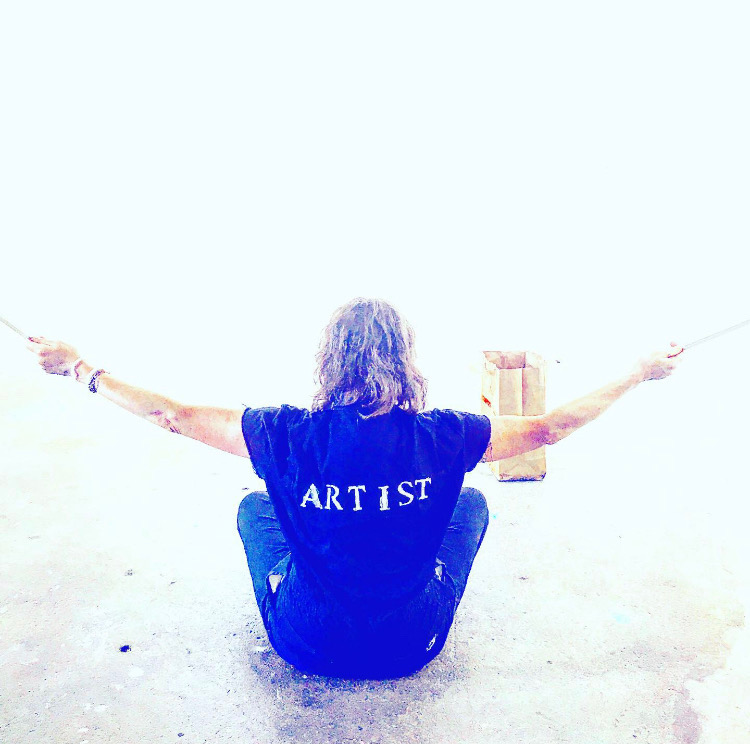
What Vache Fou Sounds Like Now
I’ll let her describe it, because no outside description comes close.
“Vache Fou sounds like mythological machinery. It’s a conversation between cosmic static and intimate domestic rituals — percolators, electric hums, fragments of melody drifting like turquoise smoke. Sometimes it feels like standing beside a river at night, hearing stories carried downstream from other lifetimes.”
The short description she offered for this feature is one of the best pieces of writing I’ve received from any artist in the Adore catalog:
“Vache Fou creates sound like an alchemist brewing stories in a midnight kitchen: black and blue atmospheres, emerald pulses, lilac light drifting through turquoise air. Machines hum like ancient bees. Domestic rituals become cosmic instruments. The result is music that feels engraved in the night — a collective signal from somewhere between the everyday and the infinite.”
The Process: Late Nights and Sonic Fingerprints
The work happens when most people are asleep. That is not a stylistic choice so much as a natural condition.
“Most of my work happens late at night, when the world quiets down and small sounds become enormous. I record fragments: room tone, accidental rhythms, the sonic fingerprints of ordinary objects. Then I layer and transform them slowly, letting patterns reveal themselves. It feels a bit like engraving patterns into water.”
The intention behind each session is not to produce a song. It is to produce a space.
“I’m trying to open a small portal. A space where the listener can step outside linear time — where a sound might feel ancient and futuristic at the same moment. Music as a temporary universe.”
And for the listener on the other side of that portal, the hope is something specific but not easily named.
“A sense of drifting through strange but familiar territory. Like hearing a story told in a language you don’t fully understand but somehow feel deeply.”
On Adore, and What a Label Can Be
When I asked Vache Fou what being part of Adore Recordings means to her, the answer reflected something I’ve been trying to build here since 1997.
“Adore feels like a constellation rather than a label — a place where artists can transmit signals that might otherwise remain unheard. There’s a shared curiosity about sound as experience, not just product.”
That shared curiosity is the whole thing. It is why Adore exists. It is why we have spent 25 years being genre-neutral, not as a marketing position, but as a genuine commitment to following sound wherever it wants to go.
What’s Next
Vache Fou is currently working on new material that pushes even further into the territory her body of work has been mapping.
“New material that goes even deeper into the idea of sound as mythology. More field recordings, more strange textures, more experiments with how everyday objects can become instruments of cosmic storytelling.”
Her philosophy, stated plainly, is this:
“Music is not something I make — it’s something that passes through the room, and sometimes I’m lucky enough to record it.”
At Adore, we believe that. We’ve always believed that. More from Vache Fou is coming. Stay close.